
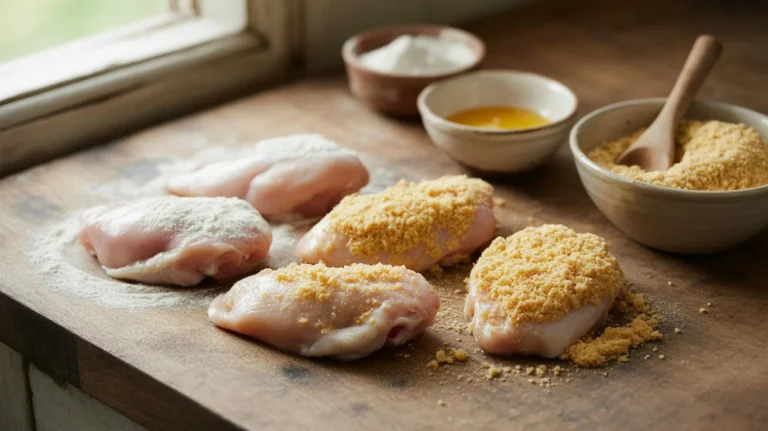
Great chicken breading is not luck. It is a clear method that anyone can learn at home. When done right, breading locks in moisture, adds crunch, and carries flavor in every bite. You do not need fancy tools or chef tricks. You need the right steps, good timing, and smart choices.
If you want a clear, proven answer, here it is. How to Make a Chicken Breading comes down to three things: dry chicken, a balanced coating, and proper rest before cooking. Master these, and your chicken will taste better every time.
Why Learning How to Make a Chicken Breading Matters
Breading is more than flour on meat. It controls texture, taste, and moisture. Poor breading slips off, turns soggy, or burns. Good breading stays put, crisps evenly, and protects the chicken. Learning how to bread chicken the right way helps in many dishes. Fried chicken, baked cutlets, air-fried strips, and sandwiches all rely on the same core method. Once you understand the process for breading chicken, you can adjust flavors without guessing.
For home cooks, this skill saves money. You can turn basic chicken into a meal people ask for again. For food service and catering, consistent breading means fewer complaints and better reviews. This is why chicken breading yorkshire styles, and classic methods still matter today.
Plan the Style
Before touching the chicken, decide how you want the final result to feel. Ask yourself one clear question. Do you want light and crisp or thick and crunchy? This simple choice helps you plan ingredients and method, just like professional kitchens do at Crown Foodservice, to keep results consistent and reliable.
Light breading works well for pan-frying and baking. It uses fine breadcrumbs or seasoned flour. Thick breading suits deep frying and sandwiches. It uses flour, egg, and coarse crumbs. This planning step keeps flavors balanced. It also helps you choose the right crumbs and cooking method. Skipping this step leads to uneven results.
Common breading styles include:
- Flour-only coating for thin crispness
- Flour, egg, and breadcrumbs for classic crunch
- Spiced flour blends for bold flavor
Once you pick the style, stick with it through all steps to breading chicken.
Prepare the Chicken
Good breading starts with good prep. Wet chicken ruins coatings. Uneven cuts cook poorly.
Start by trimming excess fat and loose skin. Cut the chicken into even pieces. This helps cooking time stay consistent. Pat the chicken dry with paper towels. Do not rush this step. Moisture prevents breading from sticking. Season the chicken lightly with salt before coating. This builds flavor inside, not just on the crust.
For food service use or bulk prep, many kitchens rely on pre-mixed options like Breading 1x13kg from Crown Foodservice. These blends save time while keeping results steady. They also work well when you need the same taste across batches. Let the chicken sit for five minutes after seasoning. This helps the salt absorb and keeps juices inside.
Set Up the Breading Station
A clean setup makes the steps to breading chicken easier and faster. Use three shallow bowls or trays.
The first bowl holds flour. Season it lightly with salt and spices. The second bowl holds beaten eggs or buttermilk. The third bowl holds breadcrumbs or crumb mix. Place them in this order: flour, egg, crumbs.
Keep one hand dry and one hand wet. This simple habit stops clumps from forming on your fingers and in the crumbs. If you are learning how to breadcrum chicken, this setup matters more than any spice mix.
Bread the Chicken
Now comes the key part of How to Make a Chicken Breading that actually sticks. Place the chicken in the flour first. Coat all sides. Shake off extra flour. This thin layer helps the egg cling. Move the chicken into the egg mixture. Let excess drip off. Do not rush.
Place the chicken into the crumbs. Press gently. Turn and press again. Make sure all sides are covered. Do not pile pieces on top of each other. Each piece needs space. This process for breading chicken should feel calm, not rushed. Speed causes patchy coating.
Rest the Coated Chicken
This step is often skipped. It should not be. Place the breaded chicken on a rack or tray. Let it rest for 10 to 15 minutes. This helps the coating bond to the meat. Resting prevents bread from falling off during cooking. It also leads to better color and crunch.
If you want to prep ahead, you can rest the chicken in the fridge for up to one hour. Keep it uncovered for best results. This simple pause improves every method of cooking.
Cook the Chicken
Cooking method affects texture. Choose the right one for your breading style.
Frying
Heat the oil to the right temperature. Around 170 to 180°C works well. Too much cool makes greasy chicken. Too hot burns the crust. Lower the chicken gently into the oil. Do not crowd the pan. Turn once during cooking. Fry until golden and cooked through. Rest on a rack, not paper towels.
Baking
Preheat the oven fully. Use a hot tray with a light oil coating. Bake at 200°C. Flip halfway for even color. This works best with lighter breading.
Air Frying
Spray the breaded chicken lightly with oil. Cook in batches. Air frying suits thinner coatings and smaller cuts. No matter the method, cook until the chicken reaches a safe internal temperature.
Optional Flavor Variations
Once you know how to make a chicken breading, flavors become easy to change. You can add spices to the flour. Paprika, garlic powder, and black pepper work well. Chees,e like grated parmesan,n adds depth to breadcrumb mixes.
Herbs add aroma. Dried thyme or parsley keeps things simple. For chicken breading in Yorkshire styles, keep the seasoning balanced. Let the chicken flavor lead. Avoid heavy sugar in breading. It burns fast and hides the meat taste.
Common Mistakes to Avoid
- Skipping the drying step. Moisture stops the coating from sticking.
- Pressing crumbs too hard. Gentle pressure gives a better texture.
- Cooking in cold oil or a cold oven. This causes soggy breading.
- Seasoning only the crumbs. Lightly season each layer instead.
- Stacking breaded chicken before resting. This pulls the coating off.
Fixing these small issues improves results quickly.
Tips for Perfect Breading Every Time
- Use fresh breadcrumbs for a cleaner crunch.
- Let the oated chicken rest before cooking.
- Keep each coating layer light and even.
- Clean your hands often during breading.
- Adjust seasoning slowly instead of all at once.
Why This Method Works
This guide follows tested kitchen practice. It reflects real cooking, not theory. The steps match how professionals bread chicken in busy kitchens. The order, rest time, and cooking choices all support texture and taste.
This is why the method holds up across frying, baking, and air frying. It also adapts well to home and commercial use. Learning how to bread chicken this way gives you control, not guesswork.
Conclusion
Learning How to Make a Chicken Breading is about doing simple steps well. Dry chicken, clear stations, gentle coating, and proper rest make the difference. Once you understand the process for breading chicken, you can cook with confidence. You can change flavors, cook methods, and portion sizes without losing quality.
Whether you cook for family or service, good breading builds trust on the plate. Keep the method steady, and the results will follow. If you need reliable ingredients or expert support, contact us to learn how we can help you achieve consistent results every time.
FAQs
What is the best flour for chicken breading?
Plain all-purpose flour works best. It coats evenly and supports the egg layer.
Can I bread chicken ahead of time?
Yes. Bread it and rest it in the fridge for up to one hour before cooking.
Why does my breading fall off?
Common causes include wet chicken, skipped resting time, or oil that is too cool.
Is breadcrumb size important?
Yes. Fine crumbs give a light crunch. Coarse crumbs give a thicker texture.
How do I keep the breading crisp after cooking?
Rest cooked chicken on a rack. Avoid stacking while hot.